


Your shopping cart is empty!
Punapeet "Kornett"
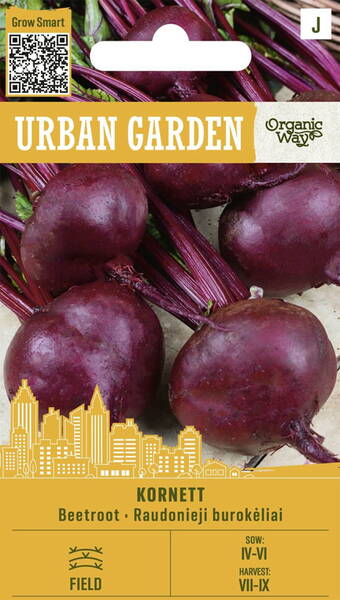
Eco seeds
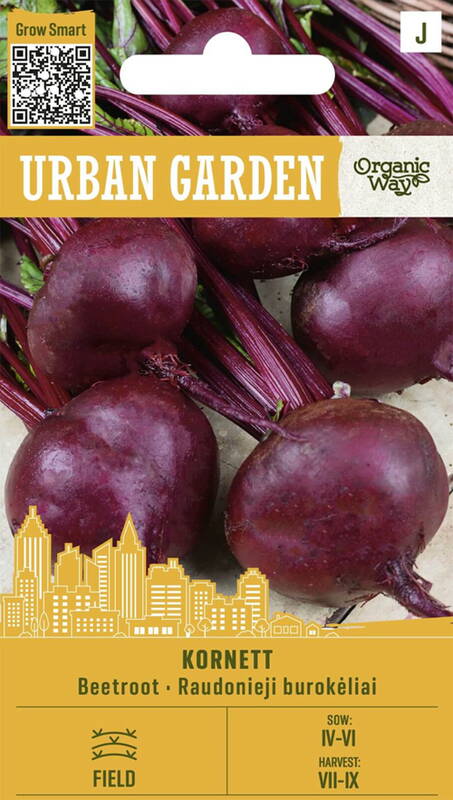
Beetroot "Kornett".
Mid-early variety. Harvest is collected after 70–85 days. Roots are round, dark red in colour.
Recommended for summer and autumn harvesting. Ideally suited for processing and long-term storage.
1.0 g = 50-60 seeds.
Cultivation.
Beetroot is grown by direct sowing of seeds into the ground in early spring. Seeding depth is no more than 1-2 cm, row spacing 45-50 cm.
To form large, even roots, seedlings must be thinned out, leaving 5-8 cm between plants. Further care consists of feeding, watering, and loosening the soil.
To obtain an earlier harvest, sowing before winter is possible in late October - early November.
Mid-early variety. Harvest is collected after 70–85 days. Roots are round, dark red in colour.
Recommended for summer and autumn harvesting. Ideally suited for processing and long-term storage.
1.0 g = 50-60 seeds.
Cultivation.
Beetroot is grown by direct sowing of seeds into the ground in early spring. Seeding depth is no more than 1-2 cm, row spacing 45-50 cm.
To form large, even roots, seedlings must be thinned out, leaving 5-8 cm between plants. Further care consists of feeding, watering, and loosening the soil.
To obtain an earlier harvest, sowing before winter is possible in late October - early November.
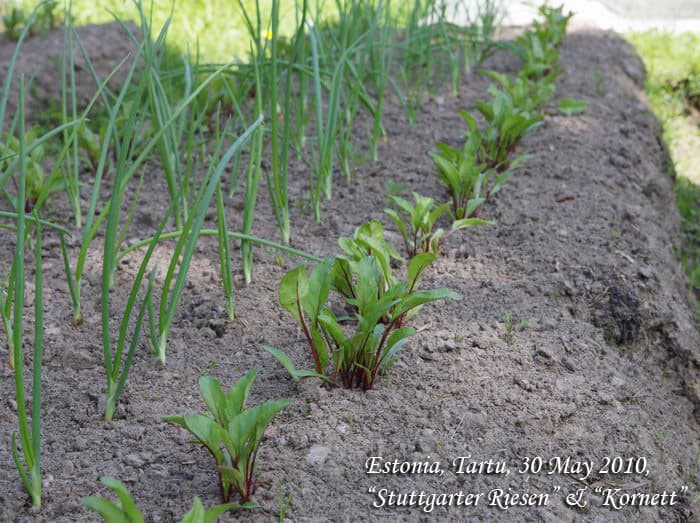
* Beetroot grows best on rich, fertile soils with a neutral reaction. On heavy soils, it should be grown on ridges.
The best predecessors are early potatoes, cucumber, onions, pumpkin, zucchini.
In autumn, humus is applied to the beetroot plot, the soil is limed if necessary, and in spring a complex mineral fertilizer is applied.
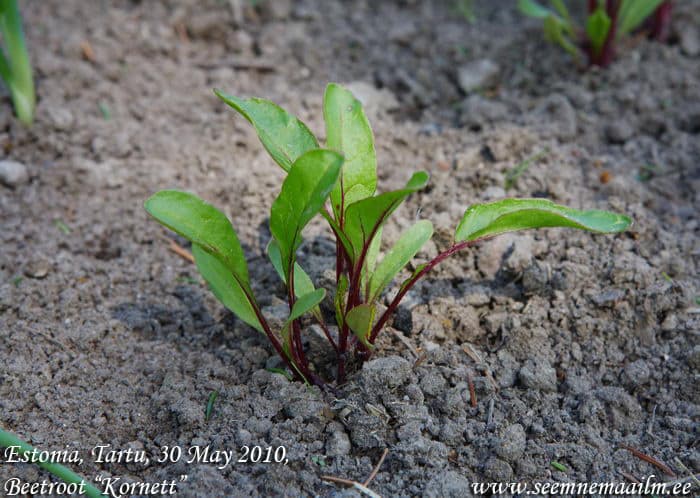
* Grow the «vitamin of youth»!
Thanks to a rare and successful combination of carbohydrates, vitamins, organic acids, macro- and microelements in beetroot, it is a storehouse of health and a "lifesaver" all year round.
Vitamin P gives special value to beetroot, contributing to the flexibility and elasticity of blood vessels, prevention of sclerosis, and lowering blood pressure. For these magical properties, it is called the vitamin of youth.
In old herbalists' books, beetroot was recommended to be used as a remedy for scurvy, tuberculosis, hypertension, anaemia, constipation, as an anti-inflammatory agent for runny nose, toothache, as well as for liver and kidney diseases and even cancer.
Beetroot roots contain a lot of sugars: up to 20 percent sucrose, less fructose and glucose, as well as pectin substances, fibre, organic acids (oxalic, malic, citric), proteins, amino acids, mineral salts of potassium, calcium, iron, manganese, cobalt, phosphorus.
In addition, it contains carotenoid pigments and anthocyanin, which gives beetroot its distinctive colour.
And in terms of iodine content - one of the well-known anti-sclerotic agents - beetroot is among the champions among vegetables (not counting, of course, sea kale).
Beetroot is also rich in various vitamins: thiamine, so necessary for normal metabolism and the functioning of the nervous system (more than two milligrams per 100 g), vitamin C (up to 10 milligrams), riboflavin.
There are few vitamins A and D in the roots. The substances betaine and betanin strengthen the walls of capillaries and other vessels, help lower blood pressure, improve fat metabolism, lower cholesterol (which prevents the development of atherosclerosis), and help the liver function.
Therefore, beetroot dishes are very useful for people prone to obesity. It is enough to add 2-3 tablespoons of grated raw beetroot to the daily diet to get a fairly quick distinct positive result - an improvement in a person's well-being.
Boiled beetroot and a decoction from it have a mild laxative and diuretic effect.
Special mention should be made of the pectin substances contained in beetroot. Like fibre, but to a greater extent, pectin substances play the role of an adsorbent - a substance that captures and then removes various poisons from the body, in particular salts of heavy metals: lead, mercury...